Monday, September 26, 2016

Article Summary for Lecture #5- Delsey

 Standards for descriptive cataloguing:
Two perspectives on the past twenty years
  
This article explains two elements, shared catalog records and computer technology, that have affected the standardization of cataloging around the world. With the great advancement of technology over the past few decades, it is not hard to believe that cataloging has evolved right along with it.
First, improvements in technology has allowed libraries all over the planet to communicate with each other and share information and resources.  The International Federation of Library Associations has created a code called the Anglo-American Cataloging Rules that catalogers follow to have uniform bibliographic records. This code allows for a single agency to create the bibliographic record following the accepted cataloging rules and this record can then be used by any cataloger, which saves a lot of time, money, and energy. Another benefit to having a standard way of cataloging items is so that they can be shared with others across the country and even internationally. A group of libraries, called the ABACUS libraries, are the national bibliographic agencies for their countries and they have helped develop alternative rules within the AACR2 so that records and items can be shared internationally with little modification and effort. Previous to this, differences in languages and cultural context made it difficult to transfer records internationally.


Next, twenty years ago, most libraries were still using card catalogs. Obviously today things are different and with the advancing technology has come a higher demand of accuracy in cataloging. Delsey (1989) points out that back in the card catalog days, as long as the card fit in the catalog box, the record was able to be used in the catalog and would serve its purpose. Today, if something it not put in the electronic catalog correctly, it is possible that when searching for the item in a database, it might never come up as a search result. This can include typos, inserting the wrong information in the wrong field, and other easily made mistakes. Computers also made it necessary for records to be consistent across all material types. The Joint Steering Committee for Revision of AACR then developed a General International Standard Bibliographic Description in 1977 that served as a foundation for all material types. This was accepted by the IFLA and was adopted into the AACR2. Today, we’re seeing a shift from records being single units to records being cataloged as relational to others. Computers have allowed us to attach related records together so that users are able to see all different editions, translations, and manifestations of a work. With technology still rapidly developing, we will see what the next twenty years brings to cataloging.

Reference
Delsey, T. (1989). Standards for descriptive cataloguing: Two perspectives on the past twenty
years. In E. Svenonius (Ed.), The Conceptual Foundations of Descriptive Cataloging, pp 51-60. San Diego: Academic Press.

Monday, September 19, 2016

Article Summary for Lecture #4- Carlyle

Understanding FRBR As a Conceptual Model
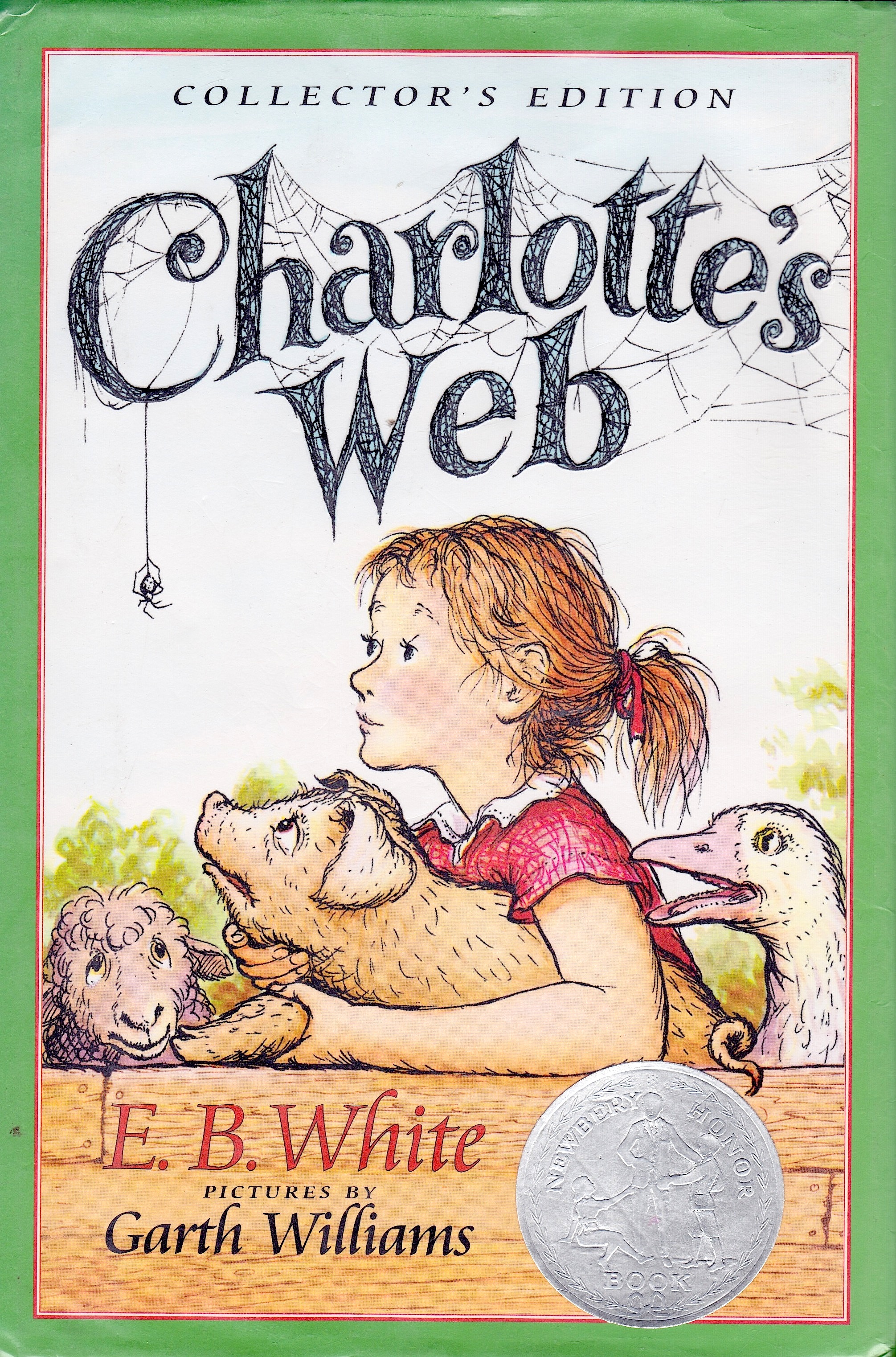
The Fuctional Requirements for Bibliographic Records (FRBR) is a conceptual model. Conceptual models can be used to explain ideas and theories through representation. To use conceptual models, one must first operationalize the elements of the model. Operationalizing makes it so that we can observe and measure the output of an abstract element. For example, when looking at something like happiness, you can operationalize that by counting how many times someone smiles or how many times they say something positive. The elements of FRBR that need to be operationally defined are “work”, “expression”, “material”, and “item”. To explain, a “work” is the original publication by an author, an “expression” is a remake or artistic realization of a work, a manifestation is the physical format of an expression, and an item is the single copy of that manifestation. The difference that this model makes in cataloging is that bibliographic records usually just describe the single item that you are looking for, but FRBR makes it so that bibliographic records contain information relating the item back to other expressions and manifestations, making FRBR an entity-relationship model. An example of this can be if I was looking for the children’s book Charlotte’s Web, instead of just getting one record for Charlotte’s Web by E.B. White, I would find multiple records, representing translations in different languages, a modern retelling, movie versions, a graphic novel version, etc… all of the different expressions and manifestations of Charlotte’s Web by E.B. White that may have different titles, authors, and formats, but they are all related back to the original work of Charlotte’s Web. This is the power of FRBR. Evaluating conceptual models can be difficult, but you must look at the goal of the model to determine if it is good or not. The goal of FRBR is to provide a framework that would facilitate a common understanding of what a bibliographic record provides information about. One of the cons of FRBR is the abstractness of the elements it uses. There are no concrete definitions or qualifications for “works”, “expressions”, and the rest. This makes it difficult for us to reach a mutual understanding and complete agreement on the correct way to catalog items using the FRBR model. What make be an expression of a work to one person may be considered a totally different work by a colleague. The entities used in FRBR are not exactly new to the cataloging world and FRBR is relatable to many past models, what is new about FRBR is that is brings relationships between different items into account when cataloging, making catalogs and databases more efficient than ever.

Reference
Carlyle, A. (2006). Understanding FRBR as a conceptual model: FRBR and the bibliographic
universe. Library Resources & Technical Services 50:264-73.

Monday, September 12, 2016

Article Summary for Lecture #3 - Russell


Hidden Wisdom and Unseen Treasure: Revisiting
Cataloging in Medieval Libraries


Cataloging in the medieval period was rudimentary at best, but serves as the foundation for the system that we use today. The biggest problem medieval librarians dealt with was lack of a standard when organizing their collections and every library had a different way of cataloging their collections. There was no mass printing and books were not as common or widely available as they are today so libraries in the medieval times did not have huge collections or a need to constantly keep up with a quickly growing collection. A lot of the libraries were part of churches and monasteries, used to hold religious texts intended for monks and other individuals involved in the church. Once larger libraries were built to include secular as well as religious works, librarians realized that they needed a better system of organizing, finding, and retrieving items from their collections. This is when cataloging became more involved with the content of books rather than just the title and author. They also needed to note the location of the items in these larger building and began labeling shelves and including the shelf name in their catalogs. Medieval catalogers used a variety of techniques to record the books in their collections, including details such as physical descriptions, condition of the item, opening lines, and many more. Books in medieval catalogs were also divided by function. School books were kept together, while religious books had their own place. In the Durham Cathedral, books that were restricted to who could use them were kept locked away behind iron gates. Interestingly enough, union catalogs, which are a collaborative list of all of the items within a group of libraries, did exist in this time period and were intended to be used by travelers looking for a specific item so that they wouldn’t waste their time going to so many different libraries. This meant they could go to a nearby library and be able to see if other libraries in the area had it, very similar to today’s library systems. The Registrum Librorum Angliae from 1296 was one of these union lists and contained the holdings of one hundred and eighty-three libraries in England. It is interesting to see how similar yet very different medieval cataloging is from modern cataloging. Medieval librarians changed how they sorted and cataloged their libraries based on what their individual library needed at the time. It seems that a lot of the same ideas and reasoning are still in use, we have just adapted to technology available to us today.

Reference
Russell, B. M. (1998). Hidden Wisdom and Unseen Treasure: Revisiting Cataloging in Medieval

Libraries. Cataloging & Classification Quarterly, 26(3), 21-30.

Monday, August 29, 2016

Reflection on the Principle of Least Effort


The back end, developer side of databases and search engines are something not many people know about. Many people do not realize all of the elements that go into organizing information into databases and search engines. Users are used to typing in what they are looking for and getting instant results without a second thought to all of the algorithms and processes that librarians and researchers use to make information searchable and easy to find. Bates (1999) calls this the paradigm of information science that is under the water line. This is part of being a librarian that people do not see, the forming and organizing of information.

On the user end, the principle of least effort states that when users are using databases to find sources, they are most likely to use what is easily available even if they are of a lower quality, rather than doing more work to get high quality sources (Mann, 1993). A study by Victor Rosenberg has shown that this is the case in both scholarly as well as non-scholarly users (as cited in Mann, 1993). Database users start by setting a reasonable goal: to find information that supports what they are researching. Once this goal is achieved, they stop searching, regardless of if there is better information they may be missing out on (Mann, 1993).

Librarians use bibliographic objectives to help people find what they are looking for. There are five types of bibliographic objectives that are used when looking for an entity in the library. They are finding, collocating, choice, acquisition, and navigation objectives (Svenonius, 2000). First you have to identify what you are trying to look for, for example, I want to look for a book about the history of unicorns. Next would come the collocating objective. This is not something that users have to deal with directly, this is more of how the database is set up. The collocating objective hopes that the database will pull up all of the relevant sources that I am looking for and only the relevant items that I am looking for. Keeping with my unicorn example, I search “unicorns” in a database and I get my results. The database finds 42 books in the library about unicorns, so the next step is the choice objective, which focuses on the preferences of the patron such as format and content. I then have to narrow my search and find out which entities are non-fiction and include the history of unicorns in a physical book format. This brings my search results to only three books in the library. The acquisition objective follows this and involves locating and obtaining the items you have found in the database. This can mean going to the shelves, downloading an e-book, ordering the item from another library, etc… Since I am only looking for physical books in the library I am currently in, I am able to walk over to the shelf and find the three non-fiction books about unicorns. The great part about being a librarian is that you have the talent of finding useful information to help others learn about so many subjects, but you don’t have to know anything about that subject to do it (Bates, 1999). Librarians don’t need to know anything about unicorns to help patrons learn about unicorns.

The connection between the principle of least effort and bibliographic objectives is that when creating databases and organizing information, librarians have to keep in mind that people are not going to go to great lengths to find exactly what they need and the best source for it, they are going to find what pops up first in their search and call it a day. Libraries and information organizers have to adapt to how people search for information. This means that information needs to be organized in a way that allows the best possible sources to be easy to find. This can include tagging items and articles with appropriate keywords and making sure that items are properly cataloged so they are able to be found. If I search unicorns and a book about dragons is in the first few results, there is an error in how the item was cataloged and the database needs to be updated because the collocation objective was not met. Dragons may be related to unicorns in that they are both part of mythology, but that is not what I am looking for at the moment.


References

Bates, M. J. (1999). The invisible substrate of information science. Journal of the American

Society for Information Science J. Am. Soc. Inf. Sci., 50(12), 1043-1050. doi:10.1002/(sici)1097-4571(1999)50:123.0.co;2-x

Mann, T. (1993). The Principle of Least Effort. In Library Research Models: A Guide to

Classification, Cataloging, and Computers (pp. 91-101). New York City, IL: Oxford University Press.

Svenonius, E. (2000). Bibliographic Objectives. In The Intellectual Foundations of Information

Organization (pp. 15-30). Cambridge, MA: MIT Press.